Thank you for your contribution!
As every year, the proceeds from the Day of the Cosmogolem will go entirely to charity. This allows us to support two special projects for children — one local, and one international.
Locally, you help support Stilt Heroes by GIGOS.
Stilt Heroes is one of the projects of GIGOS Atelier, based in the Sledderlo neighborhood but active across all GIGOS divisions (youth welfare work in Genk).
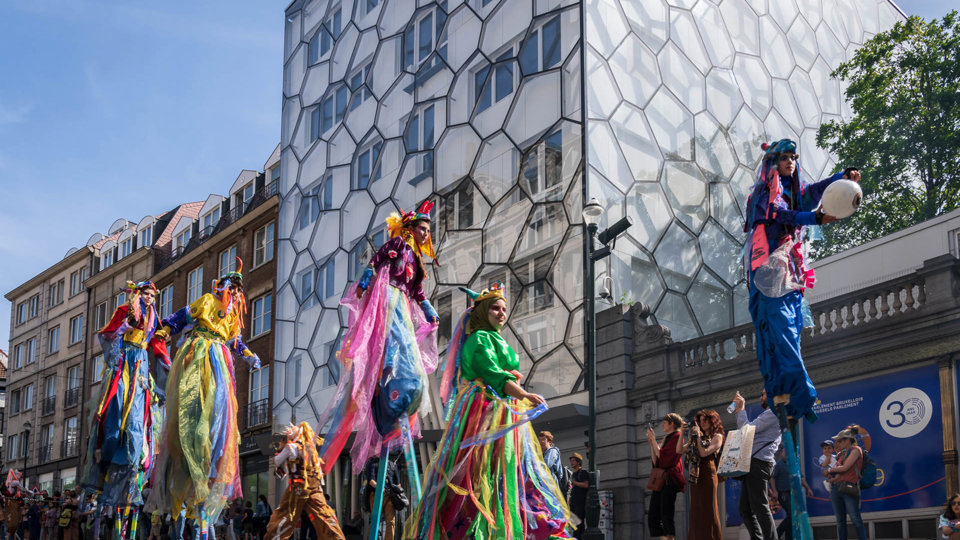
GIGOS Atelier (formerly Yawar) has been using stilt walking for many years to help teens and young people shine — especially during parades (like Genk’s O-Parade or Brussels’ Zinneke Parade), where they are admired by large crowds in self-made costumes.
In addition to long-term projects that prepare teens for parades or performances, we also offer one-off stilt-walking workshops.
On stilts, you feel tall and get applause — helping you grow, both literally and figuratively!
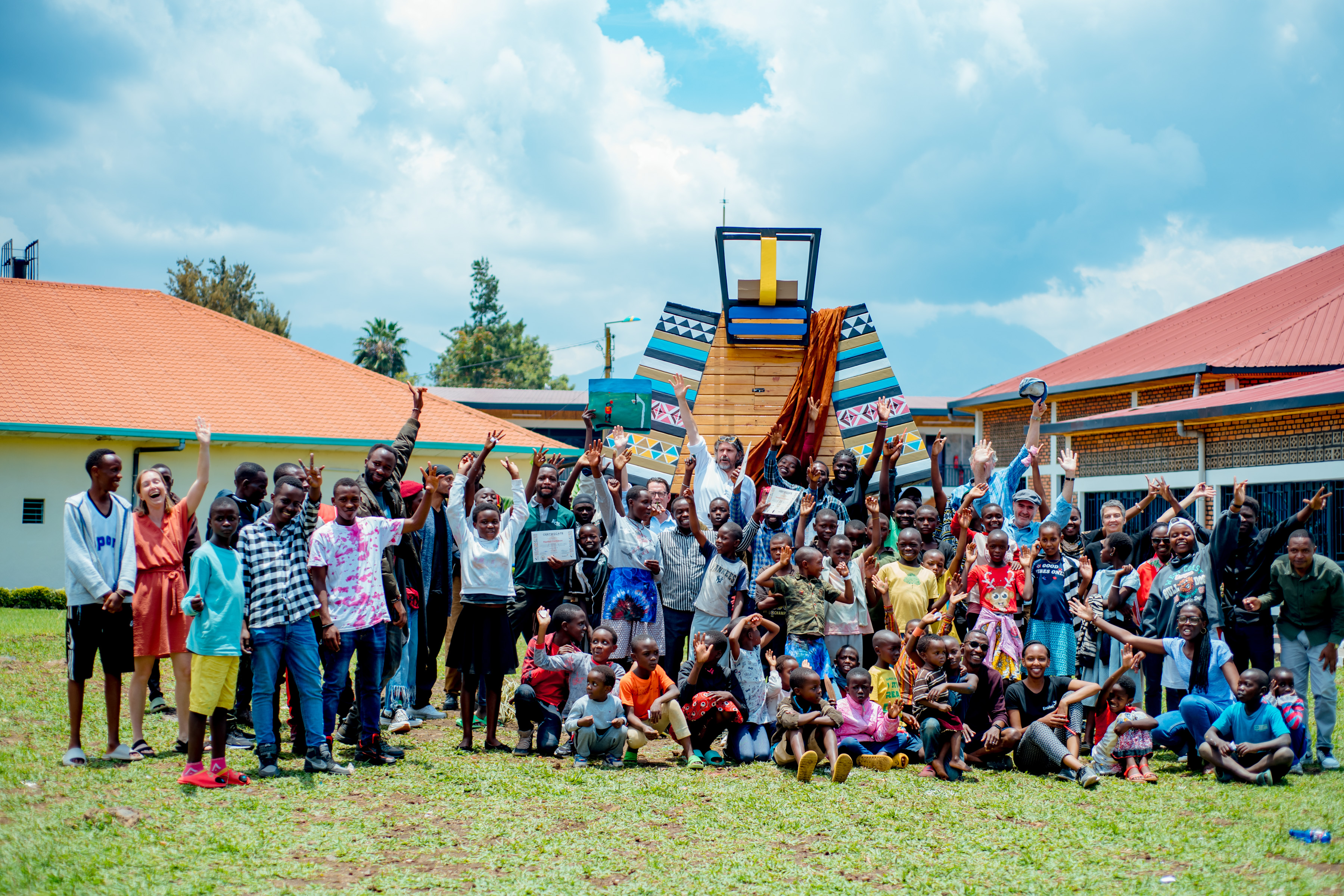
Internationally, this day also supports Cosmogolem vzw, giving children around the world a voice.
Underground Child Foundation (UCF) is a Belgian organization committed to helping girls and young women who were victims of online sexual exploitation as children.
With a strong belief that every child has a right to safety, a future, and dignity, UCF currently offers long-term support to survivors in the Philippines and Kenya.
Working through small clusters, local partners, and a human-centered approach, UCF invests in what truly works: education, self-reliance, a safe environment, and psychological support. Their support is not temporary, but built on trust, proximity, and mutual respect.
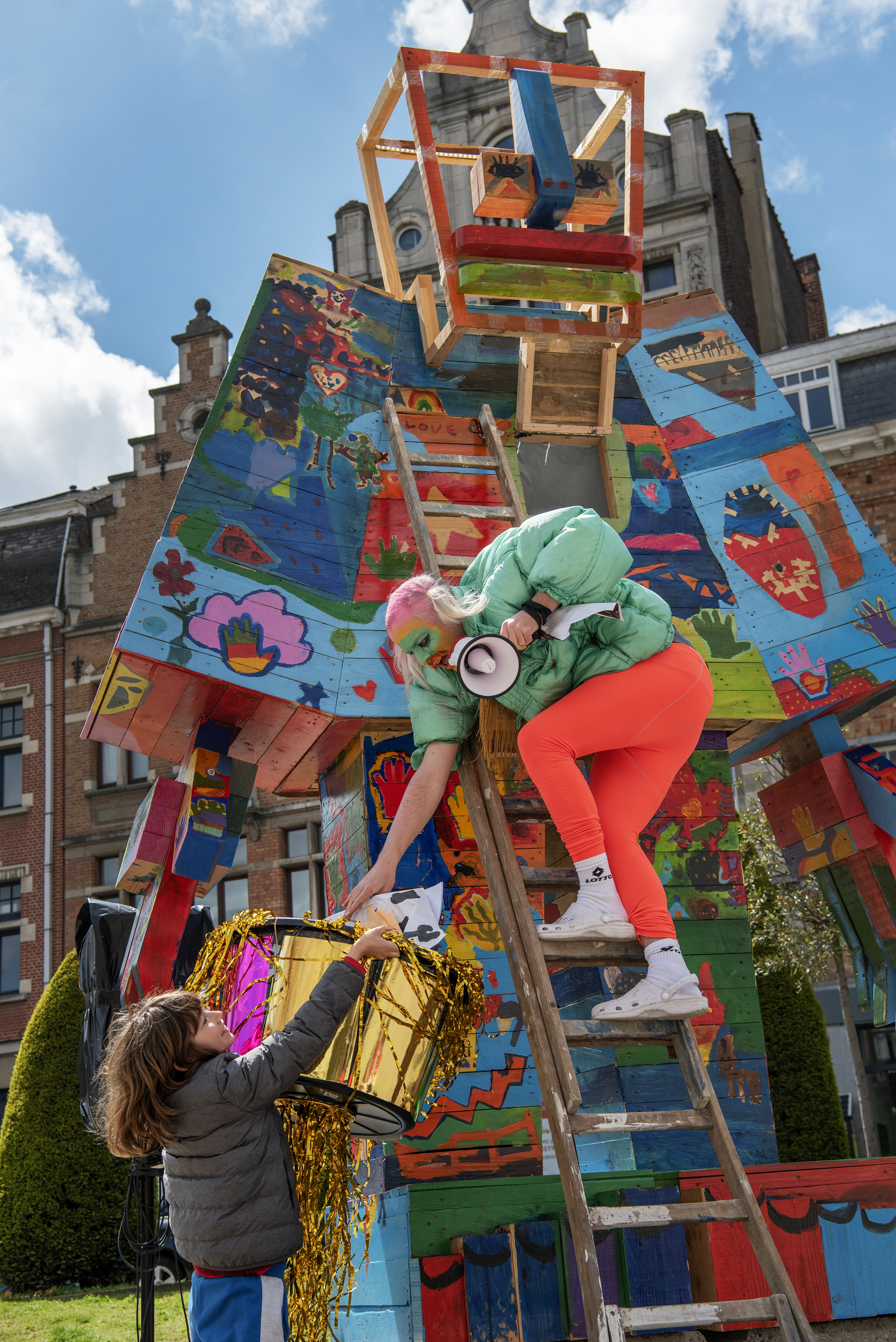
In its fight against neglect and dehumanization, UCF finds a natural ally in the Cosmogolem project by artist Koen Vanmechelen. Just like the Cosmogolem stands for hope, resilience, and universal children’s rights, UCF sees each child as full of potential and dignity.
The Cosmogolem reflects the values UCF puts into practice: offering safe spaces, amplifying children's voices, and creating new perspectives for the future.
UCF fights against shallow forms of aid and against the idea that survivors only need to be “rescued.” Instead, they help them build their own lives as mothers, students, leaders, or free individuals.
They guide them from victim to survivor, and ultimately to simply being themselves.