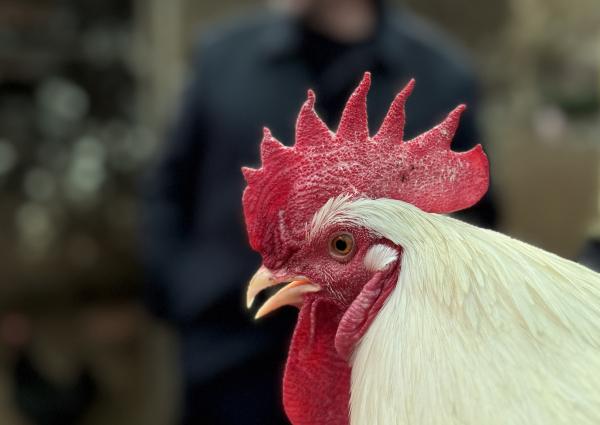
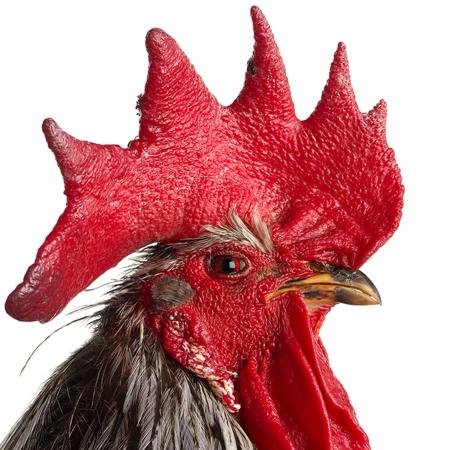
Mechelse Jærhøns
CCP 29
The crossing between the Mechelse Aseel and the Norwegian Jærhøns resulted in a narrow base. Diversity is less pronounced; phenotypically, the animals look more alike. It is a “weak link”: genetically interesting, but without pronounced strength or productivity. The traces of isolation – Norway only allowed eggs, no chickens, to enter – are visible in the result. Yet this line carries the latent promise of new diversity in future generations.
Euskal Oiloa
Basque Country
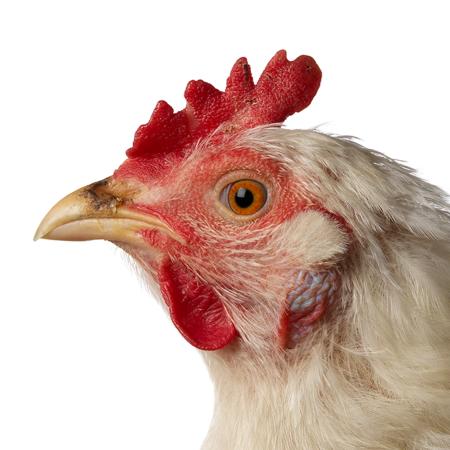
The Euskal Oiloa, literally “Basque chicken,” is the traditional breed of the Basque Country. For centuries, farmers have selected her for her robustness and dual use: both meat and eggs. She is one of the few chicken breeds that comes in five colour varieties – from golden-necked to birch, black, white and red – a living palette in the Basque landscape. Her large, cream-coloured eggs are a culinary pride. In the 20th century, the Euskal Oiloa threatened to disappear due to the introduction of commercial hybrids, but local breeders brought it back as a cultural heritage. Today, she is known for her friendly character, strong resistance to diseases and her role as a symbol of Basque agriculture and independence.
Expeditie
Vanmechelen visited a local breeder in the Basque Country who had won several prizes with his chickens. There, he found the Euskal Oiloa, in all her variants and a rare white Spanish whiteface.
Birthplace of the first chicks
Chillida Leku, Hernani (ES)
First showing
In October 2025, this crossing was first presented in the Basque Country during Vanmechelen’s exhibition, Limina – Cosmopolitan Chicken Project 30, at Chillida Leku, the museum and sculpture park of Basque sculptor Eduardo Chillida, in Hernani, near San Sebastián.
The unexpected, the appeal of the chicken
The pursuit of lasting diversity sometimes encounters its limits, the Basque crossing embodies that tension. Yet the combination again opens a window on variation in colour and phenotype. It remains an exercise in balance: how to preserve the genetic wealth while each crossing reveals its own limitations.